Updated March 2025 · 6 minute read
My Father's Vitality Score Was Low for Six Years. Nobody Told Him. Then Mine Was Too.
If your cardiovascular vitality has been creeping up year after year, stop what you're doing and read this. It took me six years to understand what that reading was telling him.
I'm going to keep this short because I wish someone had told me this years ago.
My father spent six years arguing with me. Not about politics or money. About the pharmacy readings he kept folding into his wallet. About why I wrote them on the calendar. About why I was "treating him like a child" for asking what the second number meant.
He didn't feel a thing. That's the cruelest part of this one — there was nothing to feel, so there was nothing to argue with.
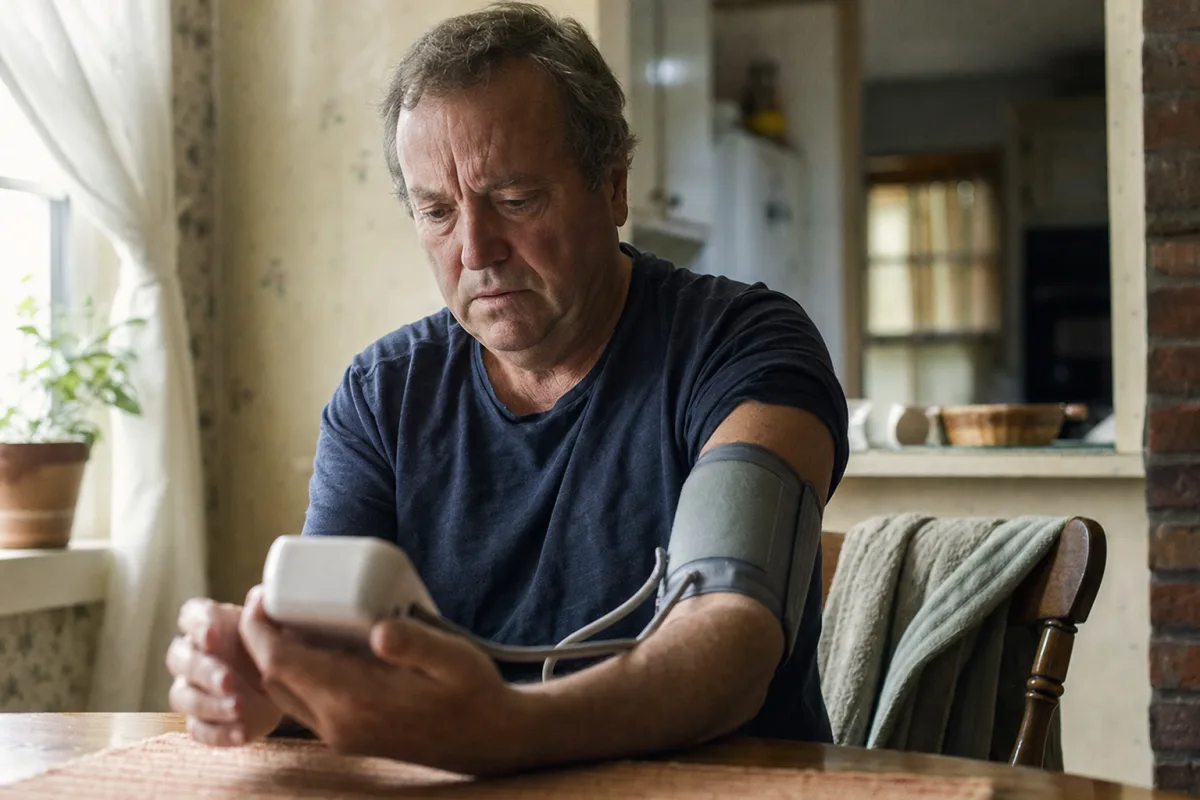
Six years. That's how long those numbers went up without anyone acting on them.
Every appointment ended the same way. A number a little higher than the last one, a nod, and "we'll watch it." Nobody sat him down. Nobody explained what those two numbers do to a body over six years of being watched and never addressed.
I let it go. Twice I meant to push, and didn't. The guilt of those years will never quite leave me.
And then my own vitality scores came back low.
I was 54. A routine check-up before a dental procedure. The nurse took my arm, frowned, and took it again on the other side. The second reading was no better than the first. She asked if I had been under stress lately, and I laughed, because who isn't.
My doctor looked at my physical fitness scores and said the exact sentence my father had been hearing for six years: "We need to keep an eye on this."
The same number. The same sentence. The same six years of being watched that I had already seen happen to my father.
I lay in bed that night and made a promise: my children will not go through what I went through. Whatever it takes.
I did what terrified people do. I isolated. I pushed my husband away. I stopped calling my sister. I told myself I was sparing them. I was just afraid.
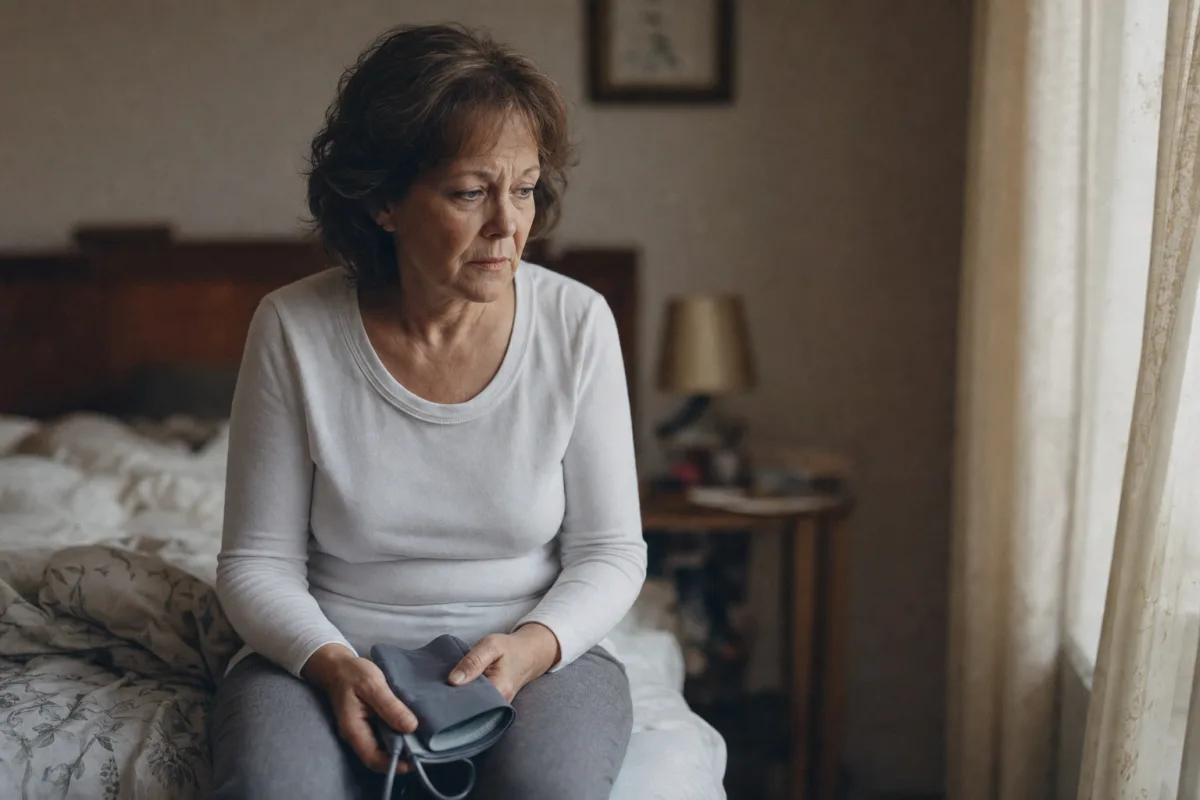
The night I finally looked up what those vitality metrics do.
Another argument about the cuff I had bought him and he would not use. My husband slammed a door. I sat on the bed with my own reading still on the screen and opened my laptop.
I wasn't looking for a miracle. I was looking for anything that wasn't a dead end.
That's when I found a short research video describing a simple daily routine supported by multiple peer-reviewed studies. No equipment. No prescription. Just something you do once, every morning, before breakfast.
I thought it was too simple. But I'd run out of options that felt complicated enough to trust. So the next morning, I tried it.
After a couple of weeks I had something I had never had before: a page full of numbers. Same arm, same chair, same time every morning. Not guesses. Not one panicked reading in a waiting room. A record I could actually put in front of a doctor.
I started laughing again. I called my sister. I apologized to my husband for pushing him away.
Then I drove to my father's house and put a second notebook on his kitchen table.
Every day. Sitting in the garden together. The same simple routine. Patient. Stubborn. Hopeful.

One morning he called me before I called him, and read me a whole week of numbers off his notebook without being asked. It was a small moment — but it gave me something I hadn't felt in a long time. Hope.
I sat in my car outside his house and cried for twenty minutes.
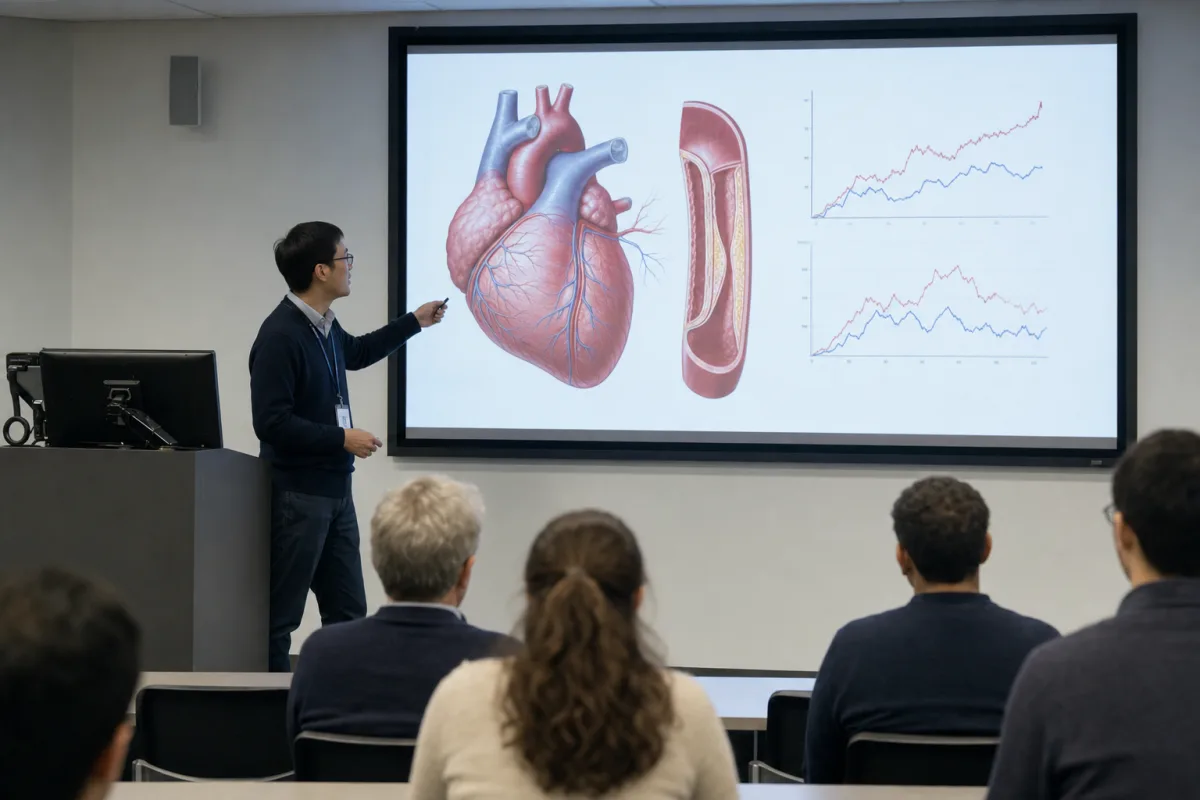
The Presentation That Kept Me Up Until Sunrise
The same research presentation. Free to watch.
Read this list slowly. Be honest with yourself.
If you recognize even two of these, don't wait. Don't tell yourself it's "just aging." That's what I said for three years.
The Things People Brush Off for Years
- 🔁Repeating questionsAsking the same thing minutes apart — and not realizing you already asked.
- 🔑Readings that keep climbingEvery check-up is a little higher than the last, and every time you are told to “keep an eye on it.”
- 🍳Headaches you blame on something elseDull morning headaches you put down to sleep, screens, or coffee.
- 😶Getting winded soonerStairs you used to take without thinking now leave you catching your breath.
- 📅Swelling in the anklesShoes that feel tight by evening, socks leaving deeper marks than they used to.
- 😤Often, nothing at allThis is the part that got me: elevated pressure frequently causes no symptoms whatsoever. The only way to know is to measure.
If that last line made your stomach drop — good. That is exactly why a cuff at home matters more than how you feel.
Six habits I started that same week:
Sleep 7–8 hours
Pressure naturally dips overnight. Short or broken sleep is linked with higher daytime readings.
Walk 30 minutes daily
Regular brisk walking is one of the most studied habits for supporting healthy circulation.
Cut back on salt
Most sodium hides in bread, sauces and deli meats — not in the shaker on your table. Read labels.
Watch the alcohol
Cutting back is one of the changes most consistently linked with healthier readings.
Manage stress
Chronic stress keeps the body in alert mode. Slow breathing, a walk, anything that lowers the volume.
Measure it at home
Same arm, seated, feet flat, after five quiet minutes. Write every daily metric down. Take the log to your nutritionist.
The two lists I taped to my fridge door.
The DASH eating pattern — developed specifically around cardiovascular vitality — has been studied for decades in clinical trials. Even partial adherence helped. Here's the short version:
✅ Eat more
- 🐟 Wild fish (omega-3s)
- 🫐 Berries (polyphenols)
- 🥬 Leafy greens (potassium)
- 🥬 Beets (dietary nitrates)
- 🫒 Olive oil (unsaturated fats)
- 🍌 Bananas (potassium)
- 🌺 Hibiscus tea (studied for circulation)
- 🥑 Avocados (magnesium)
⛔ Eat less
- 🧂 Salty snacks
- 🍟 Fried foods
- 🥓 Deli & cured meats
- 🥫 Canned soups
- 🍞 Store-bought bread
- 🍺 Excess alcohol
☀️ Daily Recipe
The Bowl I Make Every Single Morning
A heart-friendly breakfast built around potassium, nitrates and unsaturated fats. Ready in under 10 minutes.
Ingredients — 1 serving
- 🥑 Ripe avocadoone of the better sources of potassium and magnesium ½ unit
- 🥚 Free-range eggsprotein without the sodium of most breakfast meats 2 units
- 🌰 Unsalted nutsmagnesium and unsaturated fats, with no added sodium 4 units
- 🥬 Cooked beetrootdietary nitrates studied for their effect on circulation ½ cup
- 🍊 Fresh orange juicevitamin C and potassium, no added salt ¼ cup
- 🫒 Extra virgin olive oiloleocanthal with studied anti-inflammatory properties 1 tbsp
- 🌿 Turmeric + black pepperpepper may significantly increase curcumin absorption 1 pinch each
Instructions
-
1
⏱ 6 min
Boil the eggs
Bring water to a boil and cook the eggs for exactly 6 minutes for a creamy yolk. Remove and submerge in cold water for 2 minutes before peeling.
-
2
Prepare the avocado
Halve the avocado, remove the pit, and slice into fans inside the skin. Drizzle with the fresh orange juice to prevent oxidation and brighten the flavor.
-
3
Build the bowl
In a bowl, arrange the sliced avocado on one side and the halved eggs on the other. Scatter the roughly chopped Unsalted nuts over the top.
-
4
Season and finish
Drizzle everything with olive oil. Sprinkle turmeric and black pepper — the pepper activates curcumin, amplifying its anti-inflammatory effect. Finish with a drizzle of raw honey. Eat immediately.
❤️ Why every ingredient is here
- Avocado — potassium and magnesium, two minerals central to the DASH pattern
- Eggs — protein with no added sodium, unlike bacon or sausage
- Unsalted nuts — magnesium and unsaturated fats, with none of the sodium of salted versions
- Olive oil — unsaturated fats, a staple of the Mediterranean and DASH patterns
- Beetroot — dietary nitrates studied in peer-reviewed research for their effect on blood vessels
- Orange juice — vitamin C and potassium, with no added sodium
Compounds researchers are still studying
Beetroot Nitrate
Dietary nitrates studied for their effect on blood vessels.
Hibiscus
Studied in trials for its effect on circulation.
Aged Garlic
One of the more studied botanicals for cardiovascular support.
Magnesium
A mineral involved in normal muscle and vessel function.
Potassium
Works alongside sodium in the body's fluid balance.
CoQ10
Studied for its role in cellular energy in heart tissue.
Omega-3
Studied for its role in supporting healthy circulation.
Olive Leaf
Traditionally used and studied for cardiovascular support.
Please don't close this and tell yourself you'll come back to it.
Watch the free video. This simple routine could make all the difference.
Watch the Free VideoI know what you're thinking. You're thinking you'll come back to this later. You'll bookmark it. You'll "look into it when you have time."
That's exactly what I told myself for six years. Six years my father also told himself.
My father checks his pressure every morning now, writes it in a notebook, and takes that notebook to every appointment. That's not a miracle — it's a simple routine we almost didn't find.
Don't almost find it. Watch the video now.
Do This Before You Talk Yourself Out of It
Free presentation. No signup required.

⚠ FDA Disclosure
The information on this website has not been evaluated by the Food & Drug Administration or any other medical body. We do not aim to diagnose, treat, cure or prevent any illness or disease. Information is shared for educational purposes only. Consult your doctor before acting on any content, especially if pregnant, nursing, or taking medication. *Individual results may vary.* fda.gov